
Feng Shui Living Room: Layout, Colors, Five Elements & Wall Art
A feng shui living room should feel easy to enter, comfortable to sit in, and visually balanced. Place the sofa where you can see the entrance without sitting directly in line with it. Keep paths open, reduce clutter, and use color, material, light, and wall art to balance the Five Elements.
Feng shui is a traditional practice rooted in Eastern philosophy, not a promise of a specific outcome. A practical approach combines its principles with comfortable movement, conversation, natural light, and a room that reflects how you want to feel at home.

Quick Feng Shui Living Room Checklist
- Place the main sofa where it can see the entrance without blocking the doorway.
- Give the sofa a solid wall or substantial console behind it.
- Keep routes to the seating area and windows clear.
- Arrange chairs for conversation, not only television viewing.
- Choose one focal point and leave breathing room around it.
- Keep coffee-table and console surfaces usable.
1. Build the Layout Around Comfort and Flow
Before buying decor, fix the room's circulation and sightlines. A beautiful object cannot compensate for a sofa that blocks the door or a coffee table that interrupts every walk through the room.
Place the Sofa in the Command Position
In traditional feng shui, the command position lets you see the entrance without sitting directly opposite it. Place the back or side of the sofa against a solid wall and angle the seating toward the door. This also feels secure and makes it easier to welcome guests.
Keep Doorways and Pathways Open
Leave a comfortable route between the door, sofa, coffee table, and windows. Move any piece that makes people turn sideways to pass. In a small room, fewer properly scaled pieces usually feel calmer.
Make Conversation, Not the TV, the Center
Your TV can stay, but it should not become the room's only visual anchor. Angle side chairs toward one another, conceal loose cords, and balance the screen with a plant, cabinet, or artwork elsewhere. Avoid hanging art directly above a hot fireplace or crowding it against the television.
2. Bring the Five Elements Into the Room
A living room does not need equal amounts of Wood, Fire, Earth, Metal, and Water. Notice what it lacks: add warmth to a cold room, structure to a busy room, or movement to a heavy room. Use the guide below rather than treating the Five Elements as a rigid formula.
| Element | Colors & Materials | Use When the Room Needs |
|---|---|---|
| Wood | Green, wood, upward forms | Growth and vitality |
| Fire | Red, amber, warm light, energetic forms | Warmth and momentum |
| Earth | Sand, ochre, stone, mineral texture | Stability and grounding |
| Metal | White, gray, gold, metallic foil, circles | Clarity and structure |
| Water | Blue, black, flowing lines, reflective detail | Movement and calm |

|

|

|

|

|
3. Choose Feng Shui Art for the Living Room
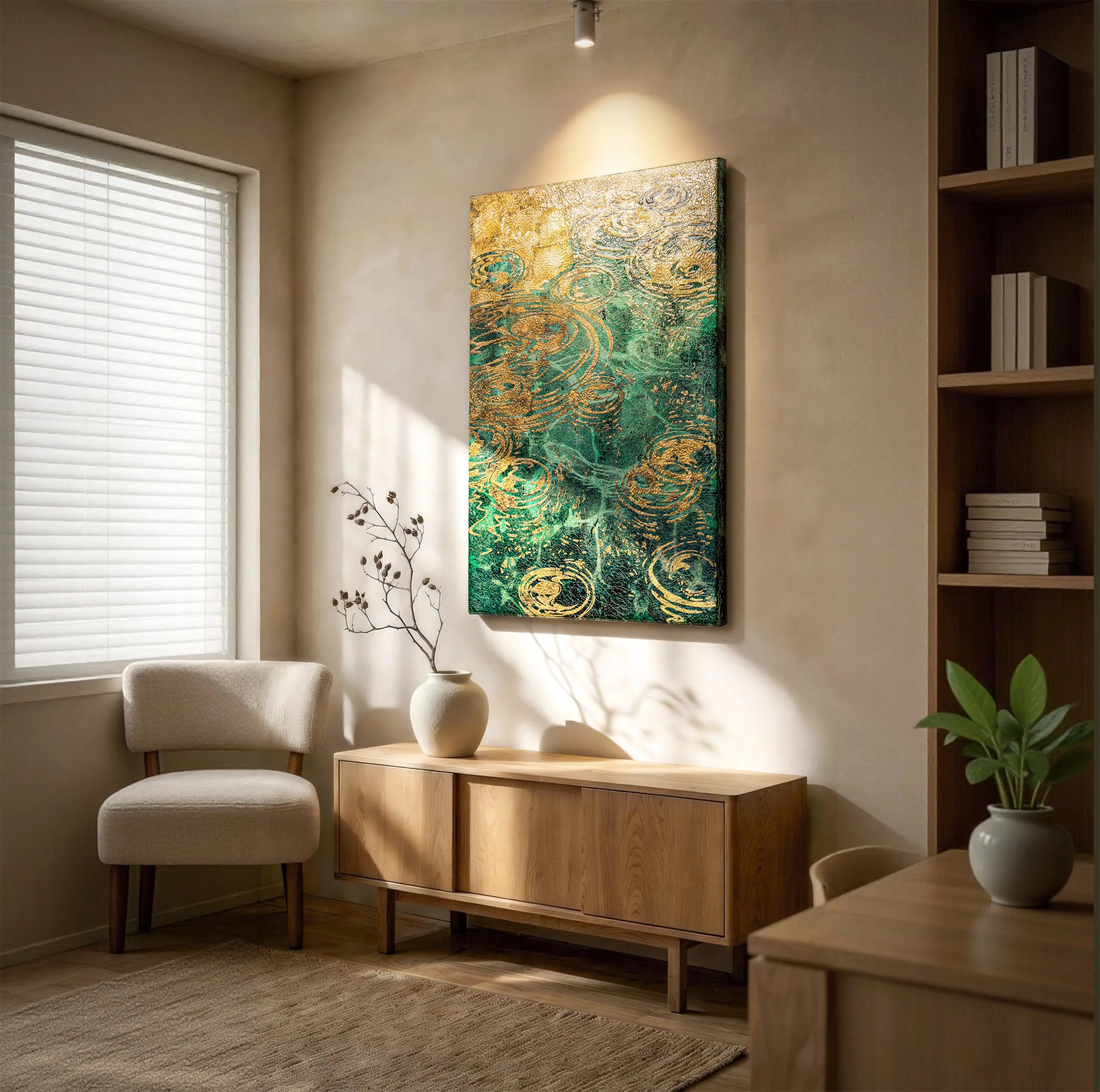
Feng shui wall art should support the atmosphere you want and fit the wall around it. AetherCanvas expresses the Five Elements through contemporary composition, mineral texture, metallic foil, and traditional lacquer craft without making the room look themed.
Explore the AetherCanvas Five Elements collection to compare the visual language of each element.
Start With the Feeling You Want
Choose Water-inspired art for flow, Wood for growth, Earth for stability, Metal for clarity, or Fire for warmth and momentum. These are traditional associations, so personal response still matters. Do not hang an image that feels lonely or unsettling simply because its colors match a formula.
Match the Artwork to the Wall
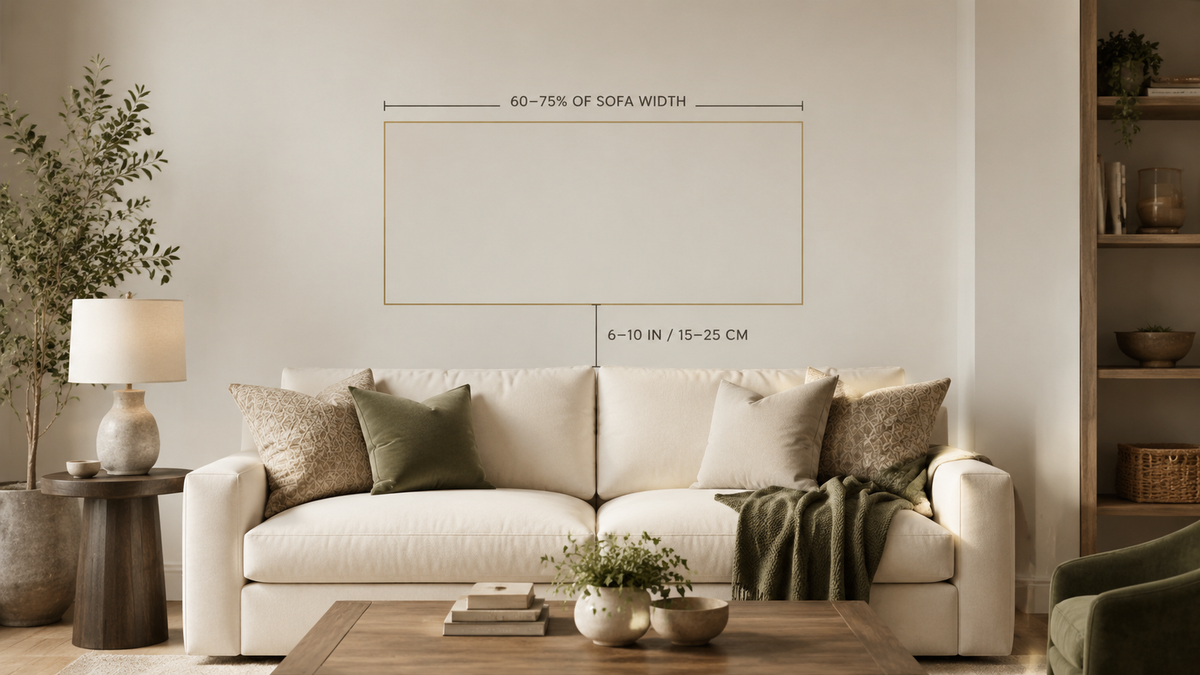
Above a sofa or console, choose art roughly two-thirds the width of the furniture below it. Hang the visual center near eye level and leave a deliberate gap above the sofa. One correctly scaled piece usually feels calmer than several undersized works.

Give the Artwork Breathing Room
Let the main artwork lead. Repeat one or two of its colors in pillows or a rug, but avoid matching every accessory. Selected AetherCanvas Aura Frame pieces allow the inner canvas to change while the frame stays in place, which is useful for seasonal updates.
4. Adjust the Approach to Your Space
For a Small Living Room
Use low-profile seating, a round coffee table, lighter colors, and one medium-scale artwork. Preserve daylight and keep furniture out of the main walking route.
For an Open-Plan Living Room
Define the seating zone with a rug and the sofa, then use Earth- or Metal-inspired art as a visual anchor. Keep a clear path between living, dining, and kitchen zones.
For a Dark or Visually Heavy Room
Layer ceiling, floor, and table lighting. Water or Metal palettes, reflective details, and open compositions can lighten a heavy room. If the space feels cold, add warm bulbs and natural wood.

5. Common Feng Shui Living Room Mistakes
- Do not block entrances or windows with bulky furniture.
- Do not turn the sofa away from the door without visual support.
- Do not fill every wall, shelf, and corner; empty space keeps the room usable.
- Do not place a mirror where it reflects clutter or chaotic traffic.
- Do not mix several intense element colors equally. Start with a calm base and one or two accents.
Feng Shui Living Room FAQs
What is the best feng shui living room layout?
Place the main sofa in a command position, preserve clear pathways, and angle seating toward conversation. The exact floor plan matters less than visibility, comfort, and ease of movement.
What is the best feng shui color for a living room?
There is no universal best color. Begin with a neutral base, then choose an element accent: Wood green, Fire red, Earth ochre, Metal white or gold, or Water blue or black.
Where should I hang feng shui art in the living room?
The wall behind the main sofa or a visible wall across from the entrance often works well. Prioritize proper scale, comfortable eye level, and enough empty space around the piece. Avoid locations exposed to excessive heat, moisture, or direct sun.
Can a TV stay in a feng shui living room?
Yes. Keep cords organized, avoid making the screen the only focal point, and support conversation with the seating layout. Art, plants, or a cabinet can visually balance the television without hiding it.
Create a Living Room That Feels Like Home
The strongest feng shui living room starts with layout, not decoration. Once the sofa feels supported, pathways are clear, and the seating invites conversation, use the Five Elements and wall art as the final layer. Choose a piece that fits the wall, reflects the atmosphere you want, and still feels like your home.
Ready to find the right visual balance? Explore all AetherCanvas artworks and choose the piece that best fits your space.

Leave a comment
This site is protected by hCaptcha and the hCaptcha Privacy Policy and Terms of Service apply.