
Exploring the Intersection of Material, Emotion, and Spatial Design
In recent years, people have been spending far more time at home. Homes have gradually taken on multiple roles — workplace, social space, retreat, and place for emotional restoration. As a result, the priorities of luxury interior design have also begun to shift. Rather than focusing purely on lavish interior decoration, more high-end homes are now designed around a different question: whether a space can make people feel calm, focused, and grounded.

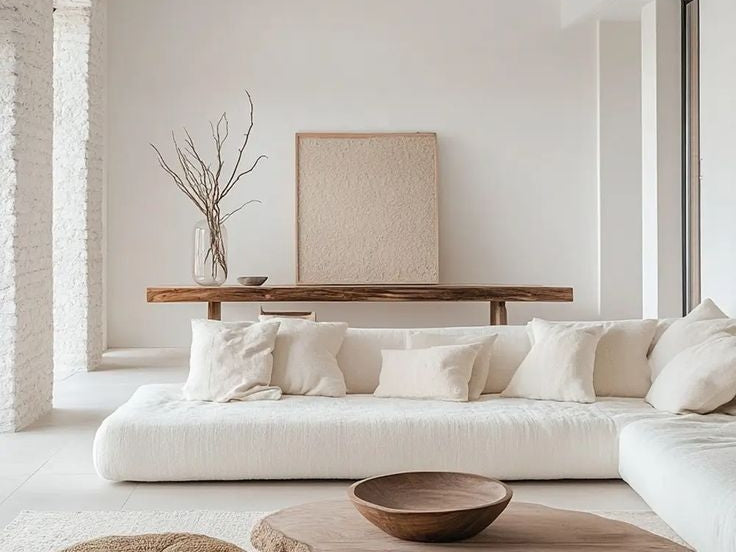
From an environmental psychology perspective, specific combinations of color, texture, and lighting can systematically influence emotional arousal and spatial perception. Through the interaction of light, material, and surface, interiors can create a stronger sense of calm, focus, and comfort.
Within this shift, the idea of “energy” in design has become an increasingly common topic. Here, energy is less about mysticism and more about sensory experience — how light moves through a space, how color shapes mood, and how materials influence a space’s visual balance and atmosphere.
Beyond Decoration: Wall Art as Spatial Experience
This has also reshaped how contemporary interior designers think about wall art: wall art is no longer treated as mere decoration for blank walls.
Some forward-thinking wall art brands have also begun exploring these ideas of spatial perception in their work, and AetherCanvas is one of them. Blending traditional Eastern philosophy, the Five Elements framework, and contemporary interior aesthetics, the brand attempts to transform the energy created through design into a form of wall art that can be both seen and felt.
The Emotional Language of the Five Elements

For many consumers, the Five Elements are often seen as an unfamiliar, even esoteric, Eastern concept. But within AetherCanvas’s design language, the Five Elements are not treated as a cultural label that needs to be “explained.” Instead, they are more closely connected to the balance between color, materials, light, and spatial atmosphere. Different elements create different visual impressions and emotional atmospheres, and AetherCanvas transforms this aspect of Eastern culture into a design experience that people can immediately feel.
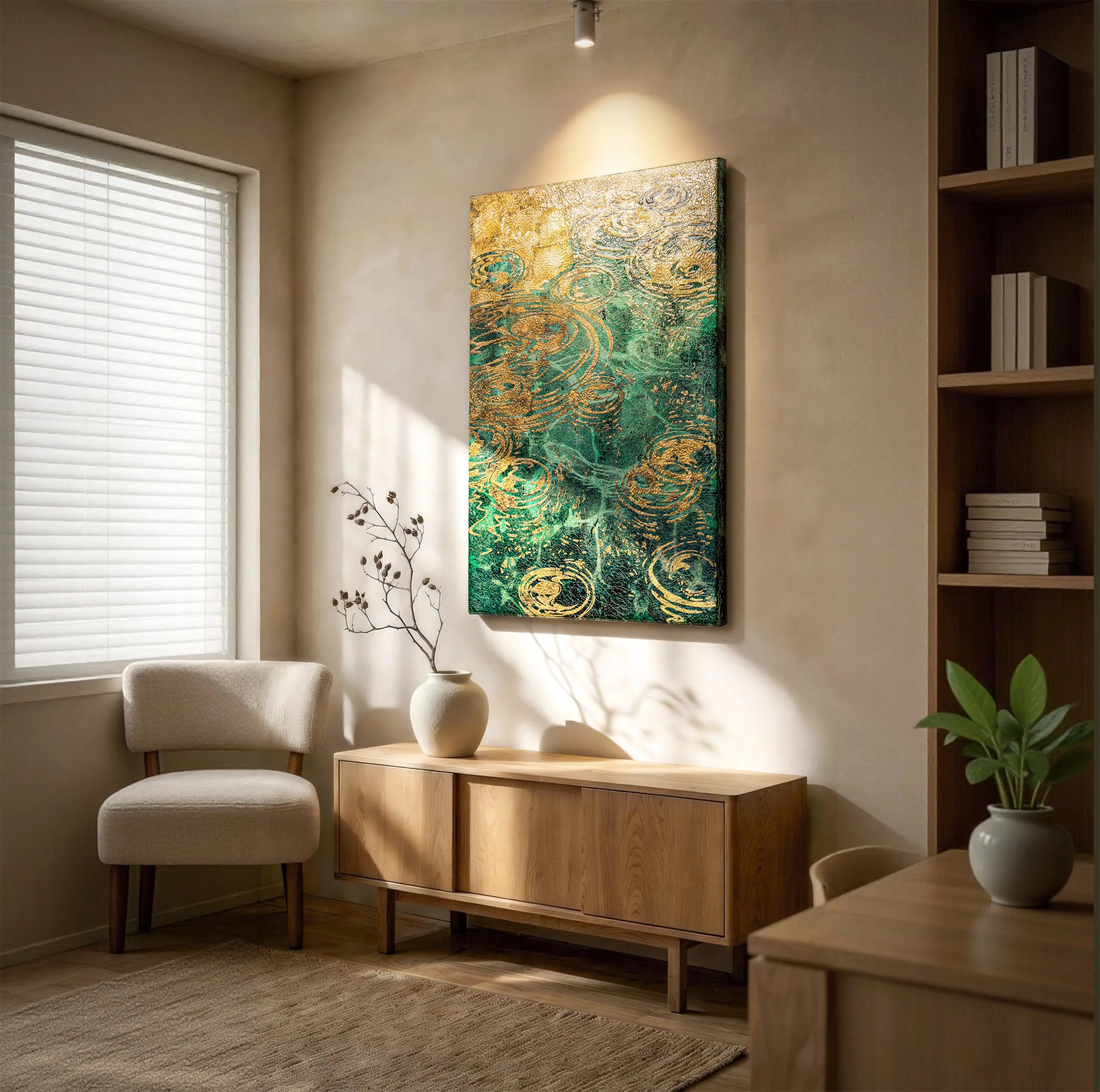
Take the Water element as an example. Water is often expressed through deep blue tones, flowing textures, and layered mineral surfaces. The spatial mood created by these works usually encourages a quiet inward focus — reducing sensory noise within a space and allowing attention to naturally turn inward. For this reason, Water-inspired artworks are often placed in spaces that require focus and concentration, such as studies or offices.
In terms of spatial perception, the Metal element tends to feel clear and sharp. Unlike the inward calmness associated with Water, Metal is more often connected to a sense of order and quiet inner strength. In interior design, this visual feeling is usually expressed through lustrous surfaces and defined visual focal points. Compared with bold metallic decoration, AetherCanvas prefers to express the strength of Metal in a softer and more restrained way, such as through materials like gold leaf.
By contrast, the Earth element places greater emphasis on stability and balance. In AetherCanvas wall art, mineral-based surfaces combined with earth-toned surface textures make a space feel softer and more grounded, creating a sense of steadiness on both a visual and psychological level.
This approach of combining colors, natural elements, and spatial emotions shows that luxury is no longer measured by branded excess, but by the emotional resonance carefully built between people and the spaces they inhabit.
This quieter sense of luxury is also rooted in natural materials and refined craftsmanship.
The Material Language of Quiet Luxury

“Quiet luxury,” with its emphasis on natural materials and refined craftsmanship, has become a defining direction in contemporary interior design.
Within this trend, the material presence of wall art is also receiving growing attention in high-end residences. Compared with digitally printed artworks that feature flat surfaces and uniform color, natural minerals and hand-layered surfaces reveal a level of depth and subtlety under changing light that machines cannot replicate.
Brands like AetherCanvas are also highlighting the value of natural materials and traditional craftsmanship in contemporary interior design. The brand works with natural mineral materials such as lapis lazuli, turquoise, kaolin clay, and metal foil, all associated with a sense of calm and lightness. Through meticulous handcraftsmanship, the artworks present constantly shifting visual depth as the light changes.
For example, natural minerals possess irregular grains and organic textures. Under daylight, mineral colors appear brighter and more vivid. In warmer indoor lighting, the patterns across the surface take on a softer and richer visual character.
Metal foil is also far more than a traditional form of decorative gilding. In AetherCanvas works, the hand-applied gilded surface changes with viewing angles and surrounding light, creating warm and delicate layers of luminosity. Compared with harsh mirror-like reflections, this softer metallic texture appears more understated and refined.
This is also why more high-end residential spaces are beginning to value artworks that retain traces of handcraft and natural materials.
When Art Becomes Part of the Space
What makes AetherCanvas compelling is its ability to transform the energy embedded in Eastern aesthetics into a spatial experience that can be directly felt through color, light, and mineral textures. Natural materials and craftsmanship give the pieces emotional depth, allowing them to shift subtly across different lighting conditions and spatial settings. As a result, art moves beyond decoration and becomes an active part of shaping a space’s atmosphere.
More from AetherCanvas can be found on Instagram (@aether_canvas_art).

Leave a comment
This site is protected by hCaptcha and the hCaptcha Privacy Policy and Terms of Service apply.